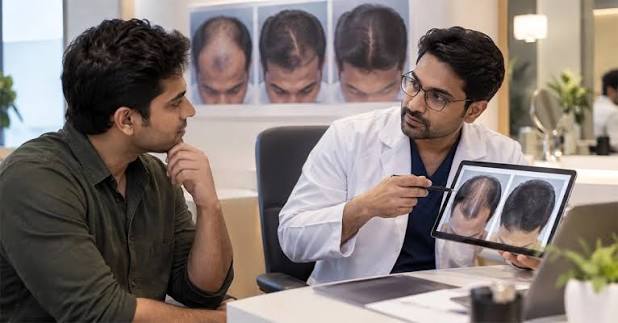
Understanding Hair Transplant Candidacy
Hair loss affects people at different ages, but not everyone experiencing thinning or baldness is suitable for hair transplant surgery. Eligibility depends on the cause and progression of hair loss, donor hair availability, scalp health, medical condition and expectations.
A hair transplant moves healthy follicles from a donor area, usually the back or sides of the scalp, to areas with reduced hair growth. Because donor hair is limited, careful assessment is essential. People researching a hair transplant in Chennai should understand that suitability is determined by individual medical findings, not simply age or visible baldness.
What Makes Someone a Good Candidate for a Hair Transplant?
A suitable candidate generally has a confirmed diagnosis of pattern hair loss, a healthy scalp, sufficient stable donor hair and realistic expectations about coverage.
Androgenetic alopecia, commonly called male or female pattern hair loss, is a common reason for transplantation. However, sudden shedding, patchy hair loss, scalp inflammation or scarring may have different causes and require medical diagnosis before surgery.
Does Age Matter When Considering a Hair Transplant?
Age is important, but there is no single age that guarantees suitability. Younger adults, particularly those under 25, need careful evaluation because their eventual hair loss pattern may not yet be clear. Transplanting a low hairline too early can leave transplanted hair isolated as surrounding natural hair continues thinning.
This does not mean every younger person is unsuitable. The decision depends on hair loss stability, donor characteristics and long-term planning. A surgeon may recommend medical management and observation before considering surgery.
Older adults are not automatically excluded either. Their suitability depends on general health, scalp condition, donor supply and realistic treatment outcomes. Age should always be considered alongside the complete clinical picture.
Why Is Donor Hair Density So Important?
The donor area is one of the most important factors in determining eligibility. Surgeons assess hair density, thickness, follicular-unit characteristics, scalp condition and long-term donor stability.
A strong donor area provides more flexibility when planning coverage. Fine hair, low density or miniaturisation within the donor region may limit the number of grafts that can be safely harvested. Excessive extraction can create visible thinning at the back and sides of the scalp.
The goal is not to extract the maximum number of grafts. It is to use the available donor supply responsibly while preserving the donor area’s appearance and considering future hair loss.
Which Hair Loss Stages Are Suitable for Transplantation?
Hair loss stage helps surgeons understand the size and location of the affected area. In men, the Norwood scale describes progression from early hairline recession to extensive baldness. Women may be assessed using the Ludwig scale or other clinical classifications.
Patients with established frontal or crown hair loss may be considered if donor hair is adequate. However, advanced baldness does not automatically mean more grafts are available. Treatment planning must balance the recipient area against the limited donor supply.
People with early thinning may benefit from medical treatment and monitoring rather than immediate surgery. Clinical examination, sometimes supported by trichoscopy, helps assess miniaturisation and progression.
Can Women Undergo Hair Transplant Surgery?
Women can be candidates in selected cases, particularly when hair loss is localised and the donor area is sufficiently stable. However, female hair thinning can be diffuse, affecting a wider area of the scalp, including potential donor regions.
The underlying cause must be investigated. Female pattern hair loss, hormonal changes, nutritional deficiencies and inflammatory or scarring conditions may require different management. Transplantation may not be appropriate when donor follicles are also affected by progressive thinning.
When Should a Hair Transplant Be Postponed?
Surgery may need to be delayed when hair loss is rapidly progressing, the diagnosis is uncertain, the scalp has active inflammation or infection, or medical conditions could affect surgical safety and healing. Insufficient donor hair and unrealistic expectations can also make transplantation unsuitable.
Medical treatments may help stabilise certain forms of pattern hair loss, depending on the patient’s circumstances. A doctor may recommend treatment and reassessment before surgery. Medication should only be used under appropriate medical guidance.
How to Choose the Right Hair Transplant Clinic?
Choosing a provider should involve more than comparing packages or advertised graft counts. Ask who will assess you, who will perform the surgical steps, what technique is recommended, how donor hair will be protected and what follow-up care is available.
When comparing the best hair transplant in Chennai options, look for qualified medical professionals, clear explanations of risks, realistic treatment plans and transparent communication. A responsible hair transplant clinic in chennai should explain when surgery is not suitable, as well as when it may help.
A consultation at a hair transplant clinic in chennai should include scalp and donor-area assessment, medical history and long-term expectations. Patients considering a hair transplant in Chennai should seek individual evaluation rather than relying on online graft calculators or age-based rules.
Making an Informed Decision
The right candidate is not simply someone with visible baldness. Suitability depends on an accurate diagnosis, stable donor hair, appropriate timing, general health and realistic expectations. A professional assessment helps determine whether surgery, medical treatment or continued monitoring is the most appropriate next step.
1. What is the minimum age for a hair transplant?
There is no universal minimum age for every patient. However, surgeons generally exercise caution with patients under 25 because hair loss patterns may still be developing. A medical assessment is necessary to determine suitability.
2. How much donor hair is required for a hair transplant?
The required donor hair depends on the size of the bald area, existing hair density, follicle characteristics and desired coverage. The surgeon evaluates donor availability before estimating the number of grafts needed.
3. Can someone with complete baldness undergo a hair transplant?
Yes, selected individuals with extensive baldness may be candidates if they have sufficient healthy donor hair. However, complete restoration of original hair density may not be possible because donor hair is limited.
4. Can people with early-stage hair loss undergo a hair transplant?
People with early-stage hair loss may not immediately require surgery. Medical treatment and monitoring may be recommended first, particularly when hair loss is progressing. The decision depends on diagnosis, stability and donor availability.
5. Can women with hair thinning get a hair transplant?
Yes, some women with localised hair loss and adequate stable donor hair may qualify. However, diffuse thinning and underlying scalp conditions must be evaluated before surgery is recommended.