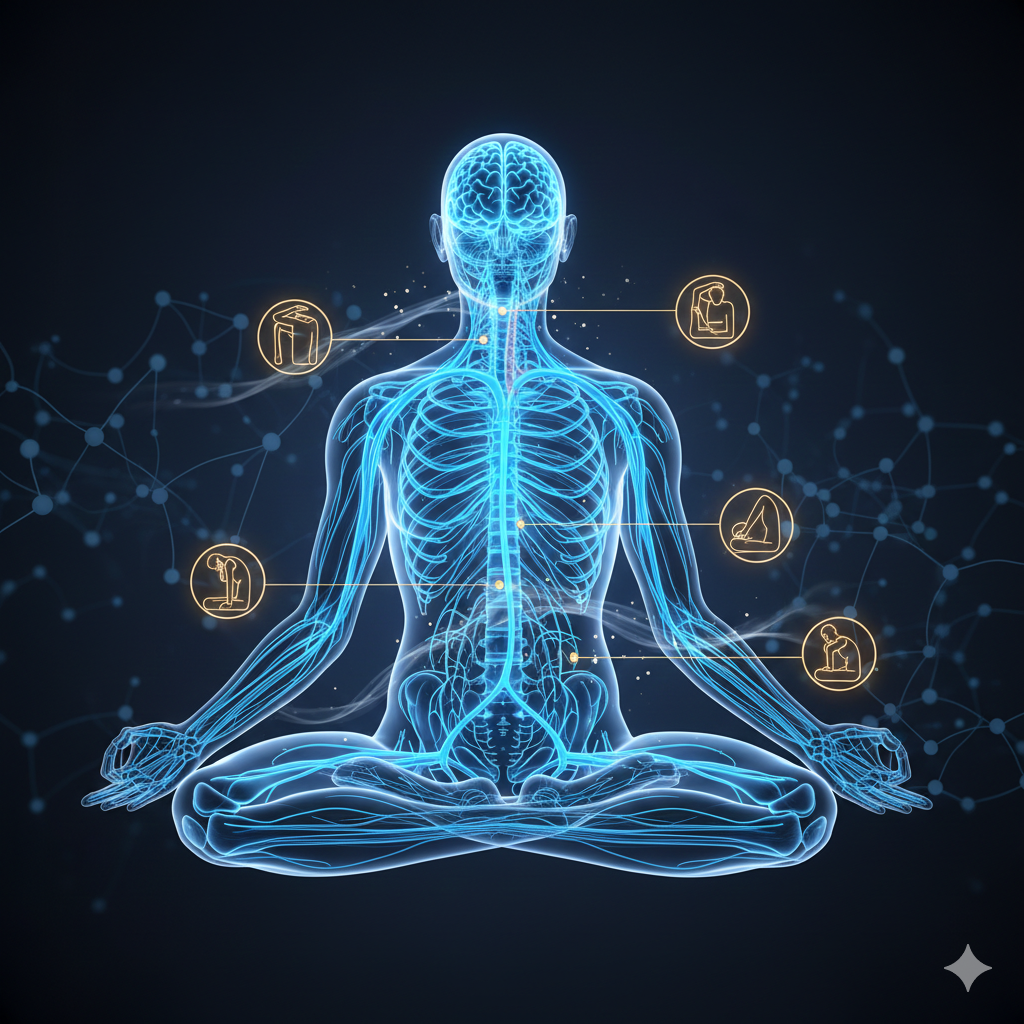
Your nervous system runs your entire life. Every heartbeat, breath, thought, and emotion flows through this intricate network of signals.
But here’s the kicker: Modern life constantly pushes it into overdrive. Chronic stress, digital overload, and relentless demands create a state of perpetual alarm in your body.
Research from the American Institute of Stress reveals that 77% of people experience physical symptoms from stress. Your nervous system wasn’t designed for this constant pressure.
Here’s the deal: Yoga and breathwork offer something pharmaceutical solutions can’t—they teach your nervous system to regulate itself. Not by numbing symptoms, but by rewiring your body’s fundamental stress response.
The ancient yogis understood this 5,000 years ago. Modern neuroscience is finally catching up, proving what practitioners have felt all along.
Let’s explore how these practices transform your nervous system from the inside out.
Understanding Stress and the Nervous System
Your nervous system has two operating modes. The sympathetic nervous system activates your “fight or flight” response during danger.
The parasympathetic nervous system handles “rest and digest” mode. This is where healing, recovery, and restoration happen.
Here’s what most people miss: These systems should balance naturally. Stress triggers sympathetic activation, then parasympathetic recovery follows.
When Balance Breaks Down
Modern life disrupts this rhythm. Traffic, work deadlines, notifications, bills, conflicts—your brain perceives these as threats.
The surprising truth? Your body can’t distinguish between a lion attack and an angry email. Both trigger the same stress cascade.
Cortisol floods your system. Heart rate spikes. Breathing becomes shallow. Digestion slows. Your immune system weakens.
Think about it this way: Imagine driving with one foot on the gas and the other on the brake simultaneously. That’s your nervous system under chronic stress.
Dr. Stephen Porges, creator of Polyvagal Theory, explains that chronic sympathetic activation becomes your body’s default setting. You’re stuck in survival mode even when safe.
Want to know the best part? This isn’t permanent. Your nervous system possesses remarkable plasticity—it can relearn balance through consistent practice.
How Yoga Calms the Stress Response
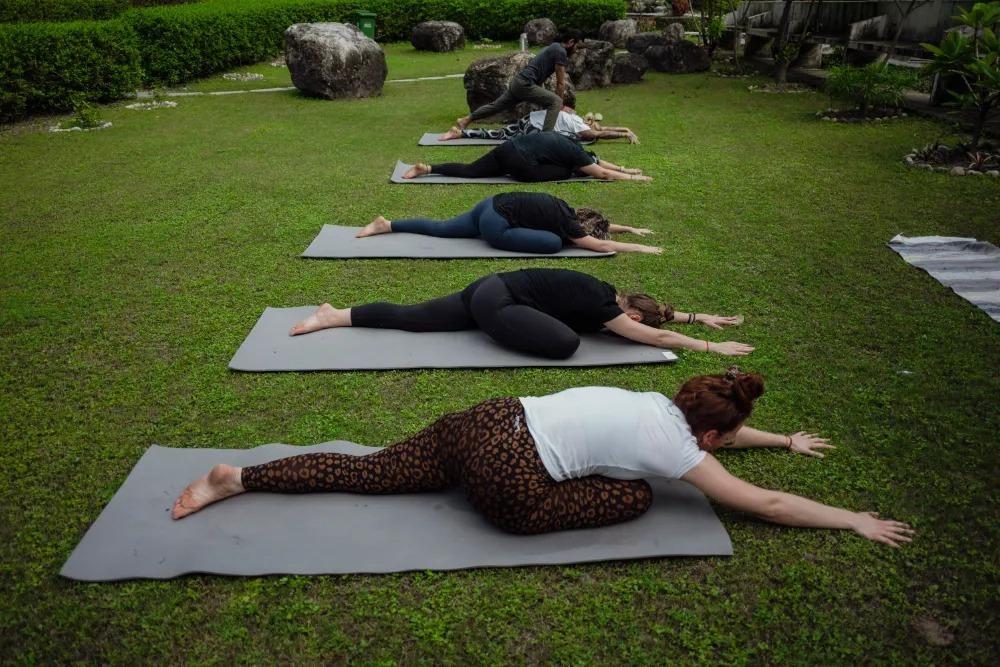
Yoga works through multiple pathways simultaneously. Physical postures, conscious breathing, and focused attention create a triple-action nervous system reset.
Get this: A 2023 study in JAMA Psychiatry found that yoga reduced anxiety symptoms by 33% more effectively than conventional stress management techniques.
The Physical Pathway
Yoga poses activate specific nerve clusters. Forward folds compress the abdominal region, stimulating the vagus nerve—your parasympathetic system’s primary highway.
Backbends open the chest cavity, creating space for deeper breathing. This mechanical expansion signals safety to your brain.
Listen closely: Inversions like legs-up-the-wall reverse blood flow, activating baroreceptors that trigger relaxation responses. Your body interprets this as decreased threat.
Many practitioners deepen their understanding through yoga teacher training in Rishikesh programs that explore these neurological connections in detail.
The Mindfulness Component
Now here’s where it gets interesting: Yoga demands present-moment awareness. When you focus on balance in tree pose, your mind stops replaying yesterday’s argument or tomorrow’s presentation.
This shift from rumination to sensation literally changes your brain activity. fMRI studies show decreased activity in the amygdala—your brain’s fear center—during yoga practice.
Students in 200 hour teacher training course in Rishikesh learn to guide this attention purposefully, creating nervous system regulation through directed awareness.
Breathwork and Its Effect on the Brain
Your breath is the only autonomic function you can consciously control. This makes it a bridge between voluntary and involuntary nervous system processes.
The reality? Every breath sends direct feedback to your brainstem. Slow, deep breathing activates parasympathetic pathways within seconds.
The Neuroscience of Breath
Dr. Andrew Huberman’s research at Stanford reveals that specific breathing patterns alter brain chemistry. Exhale-emphasized breathing increases GABA—your brain’s primary calming neurotransmitter.
Here’s the real secret: The ratio matters more than the speed. Longer exhales than inhales shift you toward relaxation. Equal timing maintains balance. Longer inhales increase alertness.
This isn’t mysticism—it’s measurable physiology. Heart rate variability (HRV) studies prove that controlled breathing increases vagal tone, improving your nervous system’s flexibility.
Many pranayama and breath-focused courses now incorporate biofeedback devices so practitioners can see these changes in real-time.
The CO2 Connection
What nobody tells you: Anxiety often stems from chronic over-breathing. Shallow, chest breathing depletes carbon dioxide, triggering panic-like symptoms.
Paradoxically, slow breathing allows CO2 to build slightly. This increases oxygen delivery to your brain and muscles, creating genuine calm rather than hyperventilated agitation.
Pranayama Techniques for Nervous System Balance
Ancient yogic breathing practices offer specific tools for nervous system regulation. Each technique creates distinct physiological effects.
Pay attention to this: These aren’t one-size-fits-all. Different pranayama practices serve different nervous system states.
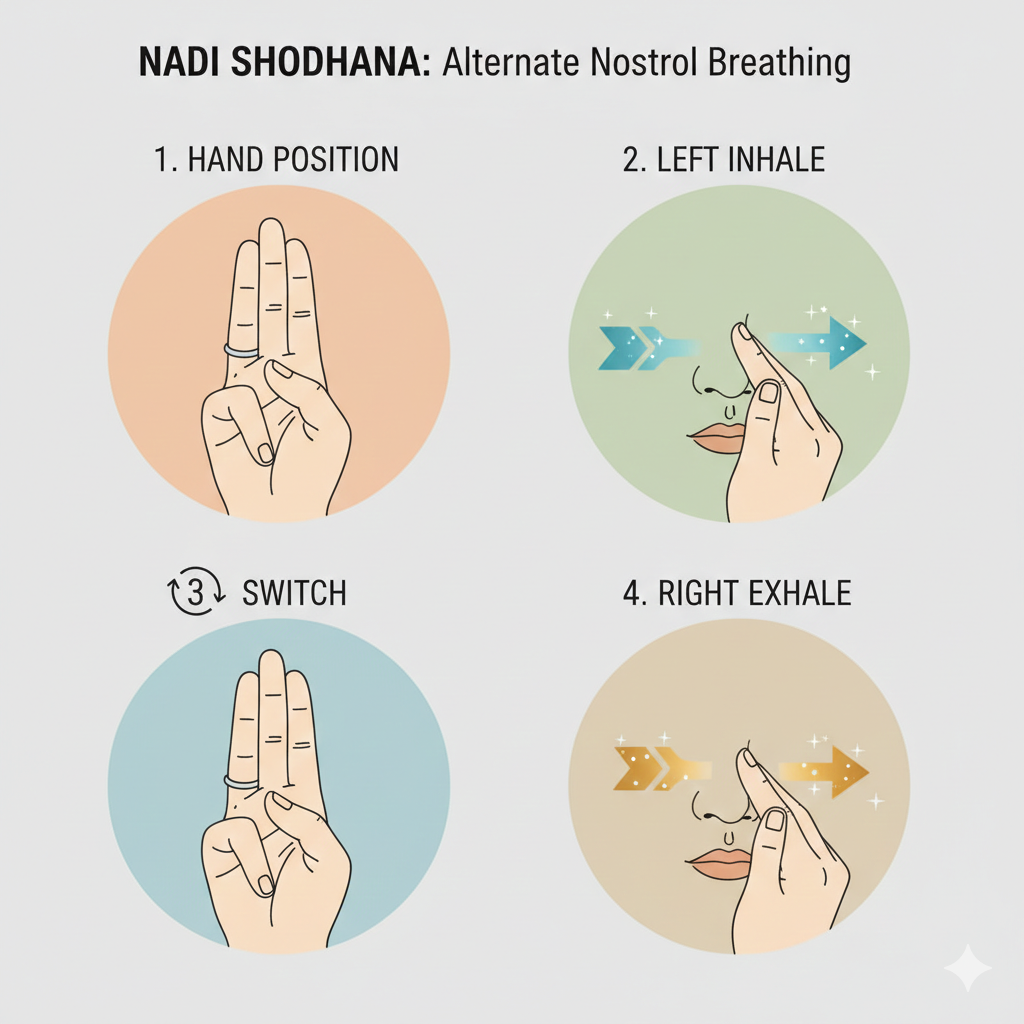
Nadi Shodhana (Alternate Nostril Breathing)
This technique balances left and right brain hemispheres. Close your right nostril, inhale through left. Close left nostril, exhale through right. Reverse.
The bottom line? Research from the International Journal of Yoga shows Nadi Shodhana reduces sympathetic activity by 28% after just 10 minutes.
It’s perfect for evening wind-down or before important events when you need calm focus.
Bhramari (Humming Bee Breath)
Inhale deeply through your nose. Exhale while making a humming sound, feeling vibrations in your skull.
Here’s where it gets interesting: The vibration directly stimulates your vagus nerve. Studies show immediate heart rate reduction and decreased cortisol levels.
Many morning meditation practices incorporate Bhramari to transition from sleep to waking without stress activation.
Sama Vritti (Box Breathing)
Inhale for four counts, hold for four, exhale for four, hold for four. This equal-ratio breathing creates nervous system coherence.
Wait—there’s more: Navy SEALs use this technique before missions. A 2022 study found it reduces anxiety by 45% within two minutes.
Ujjayi (Ocean Breath)
Slightly constrict the back of your throat, creating a soft ocean sound while breathing through your nose.
This technique maintains throughout physical practice. It activates your parasympathetic system even during challenging poses.
Practitioners learning #ashtanga open practice# discover Ujjayi’s power to sustain calm amid intensity—a valuable life skill beyond the mat.
Daily Yoga Habits for Long-Term Mental Calm
Transformation requires consistency. One yoga class won’t rewire your nervous system, but daily micro-practices create lasting change.
You might be wondering: How much is enough? Research suggests 10-15 minutes daily outperforms weekly hour-long sessions for nervous system regulation.
The Morning Nervous System Reset
Start with five minutes of gentle movement. Cat-cow poses, spinal twists, and forward folds wake your body without triggering stress.
Here’s the deal: Morning practice sets your nervous system’s baseline for the entire day. You’re teaching your body that safety is the default state.
Follow with three minutes of breathwork. Try alternating Nadi Shodhana for balance or Bhramari for calm.
Those exploring deeper morning rituals often appreciate structured morning meditation programs that integrate movement, breath, and stillness seamlessly.
Midday Stress Interruption
The surprising truth? Your body accumulates tension throughout the day without conscious awareness. Brief movement breaks prevent nervous system buildup.
Take 90 seconds for desk-based stretches. Shoulder rolls, neck releases, and seated spinal twists interrupt the stress accumulation pattern.
Add 30 seconds of coherent breathing—inhale for five counts, exhale for five counts. This resets your autonomic balance instantly.
Evening Wind-Down Ritual
End your day with restorative poses. Legs-up-the-wall, supported child’s pose, or supine twists signal your nervous system that the workday has ended.
Think about it this way: Without this transition, your body remains in low-grade alertness all night, compromising sleep quality and next-day recovery.
Scientific View on Yoga and Nervous System Health
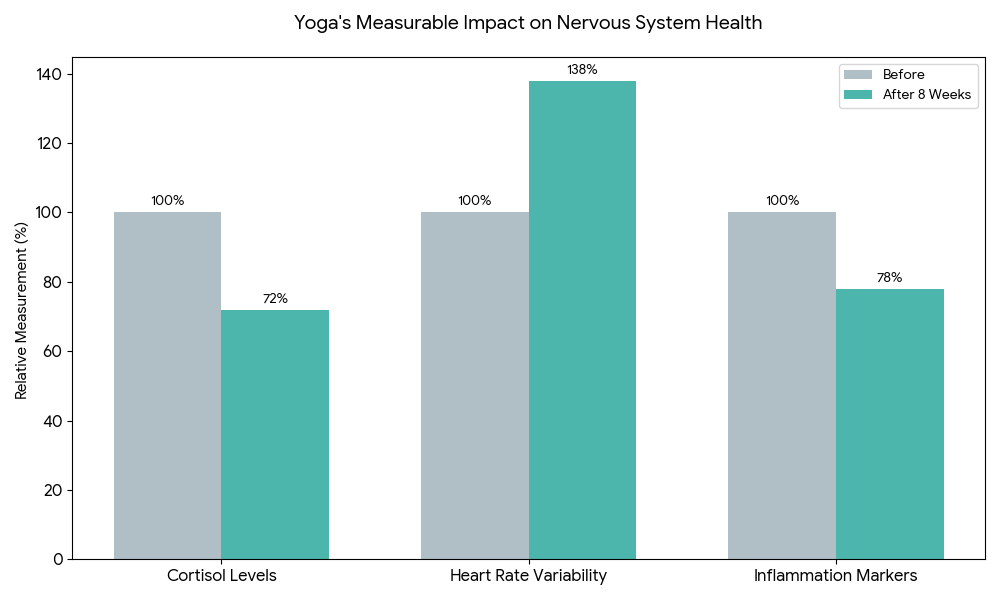
Modern neuroscience validates what yogis taught for millennia. Peer-reviewed research now documents yoga’s measurable effects on nervous system function.
Experts agree: The evidence is overwhelming and growing.
Key Research Findings
Dr. Bessel van der Kolk, trauma expert and author of “The Body Keeps the Score,” found yoga more effective than talk therapy alone for PTSD treatment. His research shows yoga helps trauma survivors reconnect with their bodies safely.
What science shows: A 2024 meta-analysis in Frontiers in Psychiatry reviewed 47 studies. Results showed consistent improvements in:
- Heart rate variability (23% average increase)
- Cortisol levels (19% average decrease)
- Inflammatory markers (15% reduction)
- Self-reported anxiety (31% improvement)
The Vagus Nerve Connection
Research reveals: Yoga and breathwork directly strengthen vagal tone—your nervous system’s resilience capacity.
Dr. Barbara Fredrickson’s research at UNC Chapel Hill proved that loving-kindness meditation combined with yoga increased vagal tone by 16% over eight weeks. Participants reported better emotional regulation and social connection.
These findings align with teachings from comprehensive programs like #300 hour yoga teacher training course# that explore therapeutic applications of traditional practices.
Neuroplasticity and Long-Term Change
Here’s what nobody tells you: Your nervous system can rewire itself at any age. This concept—neuroplasticity—means past patterns aren’t permanent.
Brain imaging studies show experienced yoga practitioners have increased gray matter in brain regions controlling stress regulation, empathy, and self-awareness.
A Harvard study found eight weeks of daily meditation practice literally changed brain structure. The amygdala (fear center) shrank while the hippocampus (learning and memory) grew.
Some practitioners support nervous system healing through complementary practices like modern ayurveda wellness that address lifestyle, nutrition, and circadian rhythms alongside yoga.